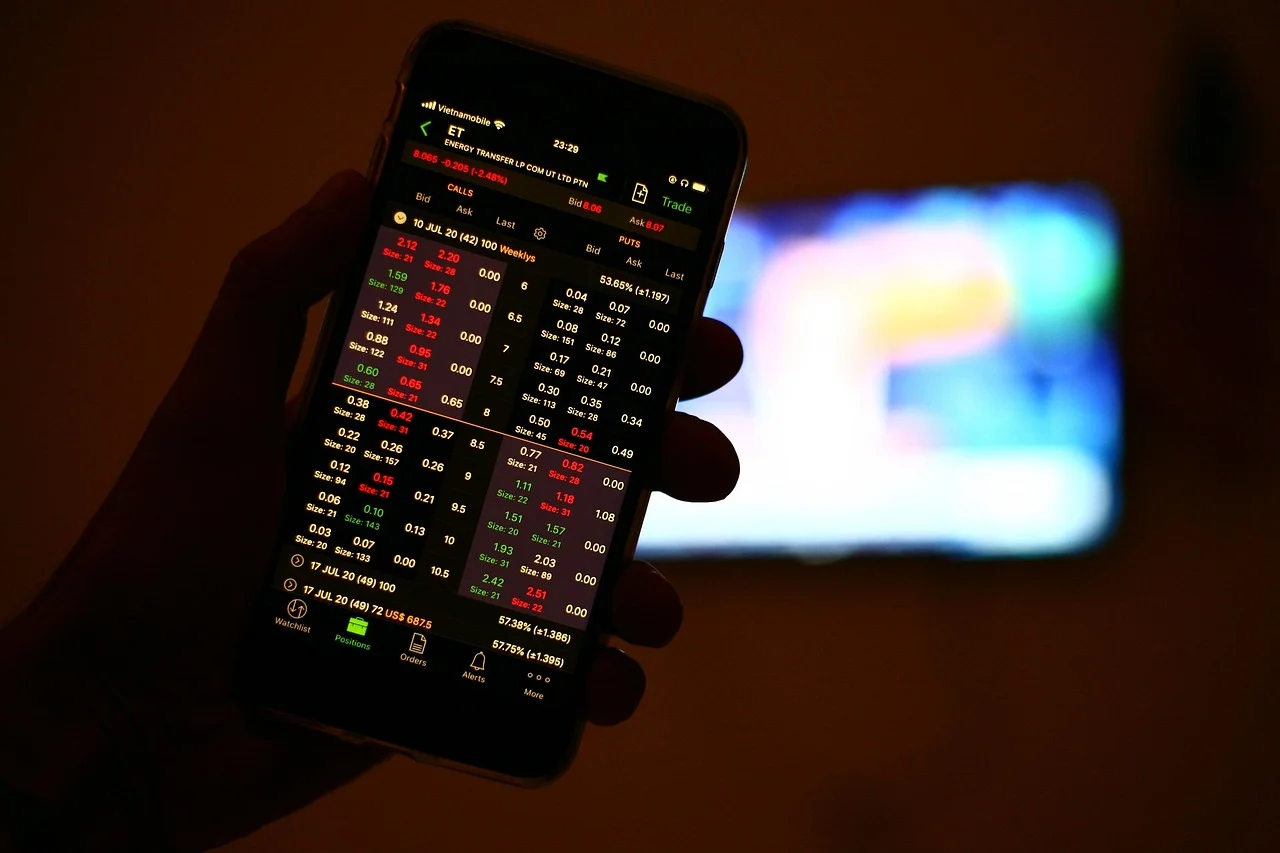
Short answer: Spot forex arbitrage opportunities by monitoring live quotes across brokers, calculating cross rates instantly, and acting fast when a price discrepancy appears. Use a charting platform with real-time data and alerts, or write a simple script to catch these temporary edges before they evaporate.
Key takeaways
- Forex arbitrage edges last seconds, so speed matters.
- Real-time data and low latency are non-negotiable.
- Triangular arbitrage is the most accessible form for retail traders.
- Spread and commission costs often kill tiny profits.
- Automated detection beats manual monitoring.
What you will find here
- What Exactly Is Forex Arbitrage?
- Why Real-Time Data Is Everything
- Tools Every Arbitrage Trader Needs
- How to Spot Triangular Arbitrage in Real Time
- Comparing Two-Broker Arbitrage
- Building a Simple Arbitrage Scanner
- Common Pitfalls That Kill Arbitrage Profits
- Real-Time Monitoring Best Practices
- Start Catching Edges Today
Forex arbitrage opportunities are like lightning strikes: they flash for a second and then vanish. But with the right setup, you can train yourself to catch those flashes. In this guide, I’ll show you exactly how to spot these price discrepancies in real time, what tools you need, and why most traders fail to act before the edge disappears.
What Exactly Is Forex Arbitrage?
Forex arbitrage is the practice of buying a currency pair at a lower price on one platform and simultaneously selling it at a higher price on another. The price difference can stem from market inefficiencies, differences in broker quotes, or mismatched cross rates.
The most common form is triangular arbitrage. That’s where you exploit a rate mismatch among three currency pairs. For example, if EUR/USD, USD/GBP, and EUR/GBP don’t align perfectly, you can trade through all three to lock in a risk-free profit.
There’s also two-currency arbitrage across different brokers. That’s rarer, but it happens when two brokers quote the same pair at slightly different prices.
Why Real-Time Data Is Everything
You can’t spot an opportunity in a 20-minute delayed feed. By the time the data reaches you, the edge is already gone. That’s why real-time pricing is the foundation of any arbitrage detection system.
Most retail brokers offer streaming real-time quotes, but the latency can vary. Some feed data every 100 milliseconds; others every second. For arbitrage, the faster the better, but even a one-second delay can kill a trade.
Here’s a concrete example: suppose the theoretical cross rate for EUR/GBP is 0.8500, but the market quote is 0.8505. That’s a 5-pip difference. At typical trade sizes, that might be a small profit, but if your data is even a few seconds old, the quote could move and erase it.

Tools Every Arbitrage Trader Needs
You don’t need a Wall Street trading floor setup, but you do need a few essentials. Let’s break them down.
Multi-Broker Price Feeds
You need to see quotes from multiple brokers or liquidity providers at the same time. Many platforms offer aggregated feeds, but you can also open multiple trading terminals side by side.
Some popular platforms include MetaTrader 4/5, cTrader, and specialized arbitrage software. The key is to have a single screen that shows all relevant pairs in real time.
Instant Cross-Rate Calculation
You can’t manually calculate cross rates fast enough. Use a spreadsheet with formulas or a charting platform that includes a cross-rate calculator. Even better, use software that highlights when a triangular discrepancy exceeds a configurable threshold.
Many traders set up alerts on their charting platform. For example, in TradingView, you can create a custom indicator that flags when the implied cross rate diverges from the actual rate by more than X pips.
Low-Latency Execution
Detection is only half the battle. You need to execute trades in milliseconds. That means using a broker with a fast order execution, preferably one with a virtual private server (VPS) located near the broker’s servers. A VPS can cut your round-trip time from 200 ms to 50 ms, giving you a real edge.

How to Spot Triangular Arbitrage in Real Time
Triangular arbitrage is the most practical for retail traders because you only need one platform. Here’s how to spot it step by step.
- Pick three pairs that form a triangle. Classic choices: EUR/USD, USD/JPY, EUR/JPY. Or EUR/USD, USD/GBP, EUR/GBP.
- Note the bid/ask prices for all three pairs simultaneously.
- Calculate the implied cross rate. For example, if you have EUR/USD and USD/GBP, the implied EUR/GBP = EUR/USD × USD/GBP.
- Compare the implied rate with the actual quoted EUR/GBP rate. If they differ by more than your transaction costs (spread + commissions), you have an opportunity.
- Execute the trades instantly. Buy the undervalued leg, sell the overvalued leg, and close all positions at the same time.
Let me give you a real example with numbers. Suppose EUR/USD bid is 1.1000, USD/GBP bid is 0.8000. The implied EUR/GBP bid would be 1.1000 × 0.8000 = 0.8800. If the actual EUR/GBP ask is 0.8795, then you can buy EUR/GBP at 0.8795 and simultaneously sell the other two legs to end with a profit of 5 pips per unit.
But remember: the moment you see that discrepancy, someone else might too. That’s why you need automated tools to calculate and execute.
Comparing Two-Broker Arbitrage
Two-broker arbitrage is simpler in theory but harder in practice. You buy the pair at the lower price on one broker and sell it at the higher price on another. The challenge is that your capital must be split across accounts, and you face transfer delays if you try to move funds.
Here’s a typical setup:
| Broker | EUR/USD Bid | EUR/USD Ask |
|---|---|---|
| Broker A | 1.1000 | 1.1002 |
| Broker B | 1.1005 | 1.1007 |
If you buy from Broker A at 1.1002 and sell to Broker B at 1.1005, you lock in 3 pips per unit. That’s a real profit, but you need to account for spreads. The table already includes them, so 3 pips is your gross profit.
However, you need sufficient funds in both accounts. And moving money between brokers takes time, which can expose you to market risk. That’s why many traders avoid this method unless the edge is substantial.

Building a Simple Arbitrage Scanner
Manually monitoring prices is exhausting and error-prone. A better approach is to build a simple scanner using a programming language like Python and a free data API.
Here’s the basic logic: fetch live prices for all pairs, calculate implied crosses, and compare them to actual quotes. If the absolute difference exceeds a threshold (say, 2 pips), print an alert.
You don’t need a complex setup. Even a script that checks every second can catch opportunities. Here’s a rough outline:
- Connect to a free or paid Forex API (like OANDA’s practice account or ForexFeed).
- Loop through your chosen pairs, fetching bids and asks.
- Compute the cross rates and compare.
- If discrepancy > threshold, send a notification to your phone or computer.
Once you have a working scanner, you can refine it. Add more pairs, adjust the threshold based on your spread costs, and test it on historical data to see how often opportunities appear.
Common Pitfalls That Kill Arbitrage Profits
Even if you spot an opportunity, you might still lose money. Here are the biggest traps.
Spread Costs
The spread is the difference between the bid and ask. If the arbitrage edge is only 2 pips but the spread is 3 pips, you’re instantly negative. Always calculate net profit after spreads.
Slippage and Latency
When you hit the buy button, the price might move before your order fills. Slippage can eat into your profit. That’s why low-latency execution matters more than anything else.
Execution Risk
In triangular arbitrage, you place multiple orders simultaneously. If one fills and the other doesn’t, you’re left with an open position and market risk. Use limit orders or a broker that offers guaranteed simultaneous execution.
Broker Constraints
Some brokers prohibit arbitrage or scalp trading in their terms. They can freeze your account if they suspect you’re doing it. Read your broker’s policy before you start.

Real-Time Monitoring Best Practices
To consistently spot arbitrage opportunities, I recommend the following routine:
- Set up alerts on your charting platform for any pair that moves outside a normal range. This can be a sign of inefficiency.
- Use volatility indicators like the Average True Range (ATR) to identify when markets are ripe for mispricings.
- Trade during liquid sessions when spreads are tight, like the London-New York overlap.
- Keep your software updated and your system clock synced to your broker’s time.
Also, remember that arbitrage edges are often tiny. A 5-pip edge on a standard lot (100,000 units) is about $50. That’s nice, but you need volume and discipline to make it worthwhile.
Start small. Paper trade for a few weeks to see how often your scanner actually catches real opportunities.
Start Catching Edges Today
Your first step is to open a demo account and practice with real-time data. Set up your cross-rate calculator, test your scanner, and get comfortable with the mechanics.
Then, when you see your first live discrepancy, act calmly and fast. The edge only lasts seconds, but with practice, you’ll train your eye to spot them routinely.
Frequently asked questions
How long do forex arbitrage opportunities last?
Forex arbitrage opportunities typically last only seconds to a few minutes. Because markets are efficient and algorithms compete, most price discrepancies are corrected quickly. The faster you can detect and execute, the more likely you’ll capture the profit before it disappears.
Can retail traders successfully do forex arbitrage?
Yes, but it’s challenging. Retail traders can profit from triangular arbitrage using a single broker with real-time data. However, spreads, commissions, and slippage must be low enough to leave a margin. Automated tools and a VPS can improve your chances.
Is forex arbitrage legal?
Yes, forex arbitrage is legal for retail traders. However, some brokers prohibit aggressive arbitrage or scalping in their terms of service. Always read your broker’s policies to avoid account restrictions. No law prevents individuals from exploiting price differences.
What is the smallest profit I need to make arbitrage worthwhile?
The smallest profit depends on your trade size and costs. A common rule is that the edge must exceed the combined spread and commission. For example, if your total round-trip cost is 2 pips, you need at least 2 pips of profit to break even. Anything above that is your gain.
Do I need a special bot to spot arbitrage opportunities?
Not necessarily. You can spot triangular arbitrage manually with a calculator and real-time price feeds, but it’s extremely difficult because of speed. A simple script or using platform alerts helps. Bots automate execution, but you can start with manual alerts.
What are the main risks of forex arbitrage?
The main risks include execution risk (one order fills but not the other), slippage, and broker restrictions. There’s also the risk of your internet connection going down mid-trade. Always use a stable connection and consider a VPS to minimize technical failures.
2 thoughts on “Real-Time Forex Arbitrage: How to Spot Opportunities Fast”